From Support Function to Strategic Enabler: The Evolution of IT
How technology has changed business strategy landscape


Decades ago, information technology (IT) was seen as a support department, tasked with keeping systems running. Today, that perception has changed radically. IT has become a strategic enabler, driving innovation and growth in organizations.
Porter's Model and Beyond
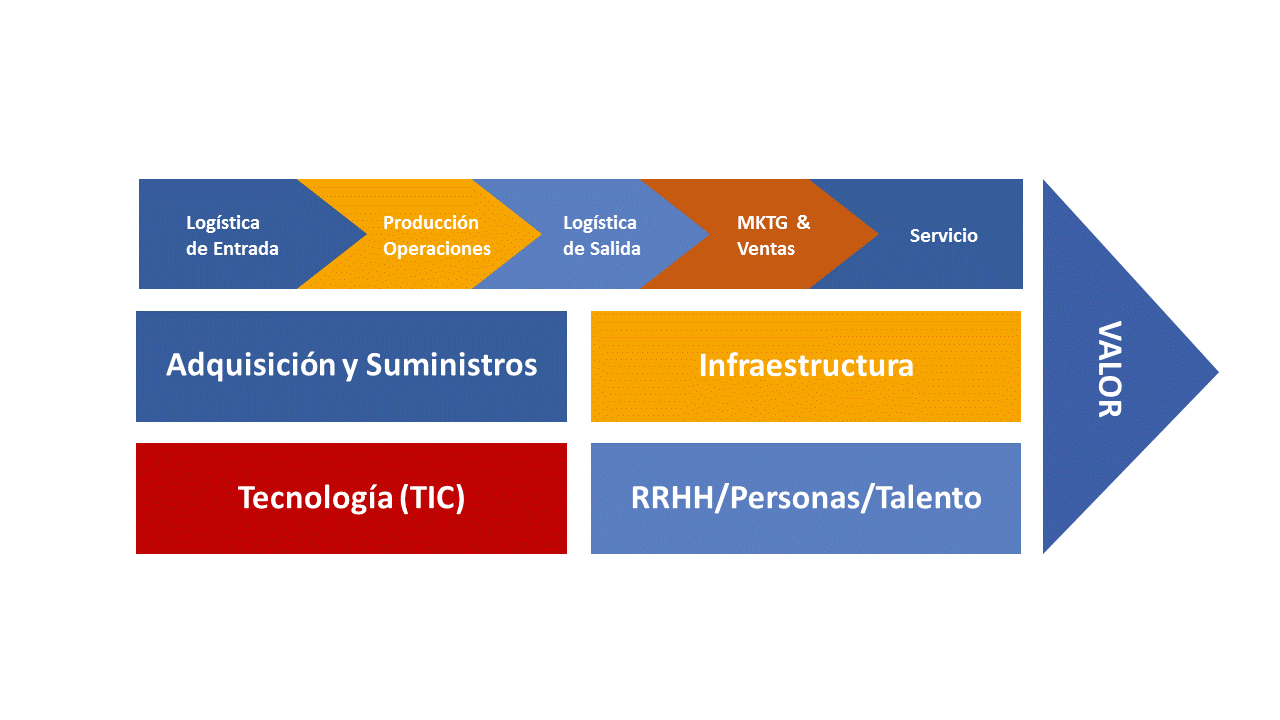
In the 1980s, Michael Porter revolutionized strategic thinking and described, along with the 5 forces model, the value chain model. In it, he describes Information Technologies as a support function in his value chain model. But in the digital age, this approach is no longer sufficient. Technology has permeated all the functions that in the original model were considered primary technologies. It has even given way to the conceptualization of OT (Operational Technologies) as companions of IT. Technology not only supports operations; it redefines them. Companies like Amazon, Netflix, and Tesla have built their business models around technology, demonstrating its transformative power. For example, Amazon uses recommendation algorithms to personalize the customer experience, while Netflix leverages data analysis to produce content that resonates with its audience. This is the reason why we are witnessing the transformation of entire industries, such as the financial industry (FinTech) or the telecommunications industry (smartphones that are everywhere, do everything... and by the way, they also serve to make calls).
Digitization and Transformation
Digitization has allowed companies to optimize processes, improve customer experience, and create new business models. But digital transformation is not just technology; it's culture, leadership, and adaptability. Organizations that have succeeded in this transition are those that have integrated technology into their DNA, aligning it with their strategic objectives. For example, Walmart has invested in technology to optimize its supply chain, allowing it to compete with giants like Amazon.

Cultural Transformation and Change Management: A Human Journey
Digital transformation goes beyond the mere implementation of new tools. It is an organizational metamorphosis that demands a profound cultural change. I have learned that companies must cultivate a mindset of agility and adaptability, breaking with rigid structures and fostering collaboration. Visionary leadership is essential, clearly communicating the vision and empowering employees. And we must not forget people-centered change management, addressing their concerns and empowering them for success in the new digital environment.
Rapid Technological Change: Navigating Constant Uncertainty
The technological landscape evolves at a dizzying speed, and I have seen it firsthand. Continuous technological surveillance is crucial, exploring areas such as artificial intelligence and cloud computing. Flexibility and scalability are key, adapting infrastructures to changing needs. And cybersecurity must be an absolute priority, protecting our data and systems from threats.
New Business Models: Technology as a Catalyst for Opportunities
Technology opens a range of possibilities for value creation. Take, for example, the platform economy, the personalization of the customer experience, and the automation of processes. The key is to understand how technology can transform our way of doing business and generate new sources of income, improve margins, change the role of intermediaries, consider centralized versus decentralized services. It implies a different governance.
Social Changes and Impact: A Legacy of Transformation
Technology has a profound impact on society, and we have a responsibility to use it for the greater good. If we remember the invention of Gutenberg's printing press, how the massification of access to reading and, consequently, knowledge, changed people's aspirations, social structures, and economic models of the time. Current information and knowledge technologies have the potential to generate equally significant, even greater, changes. However, they also carry risks, such as disinformation, manipulation, social control, or the widening of gaps. We must be aware of these risks and work to mitigate them. The future we build will depend on the decisions we make today. What role will we play in this transformation? How will we ensure that technology is a force for good? The answer is in our hands.

Key Lessons: A Call to Strategic Action
To make the most of technology as a strategic enabler, organizations (public and private) must go beyond the mere adoption of tools. They must:
Continuously innovate and with purpose: Technology must evolve in sync with business needs, but it must also anticipate future trends. This implies investing in research and development, fostering experimentation, and being open to new ideas.
Foster interdisciplinary collaboration: IT and business teams must work closely together, breaking down silos and sharing knowledge. Technology must be a tool to achieve the organization's strategic objectives, and this requires a deep understanding of business needs.
Consider the social and ethical impact: Technology is not neutral; it has social and ethical implications that we must carefully consider. This implies being transparent about how we use data, protecting user privacy, and working to close the digital divide.
Invest in talent development: Technology is changing rapidly, and organizations must ensure that their employees have the skills necessary to thrive in the new digital environment. This implies investing in training and development, fostering continuous learning, and creating a culture of innovation.
Build flexible and scalable infrastructures: IT infrastructures must be flexible and scalable enough to adapt to changing business needs. Cloud computing can be a powerful tool to achieve this flexibility and scalability.
Final Reflection
The evolution of IT from a support function to a strategic enabler is a testament to its transformative power. How is your organization leveraging technology to drive innovation and growth? Share your experiences and together we can learn to navigate this exciting journey.